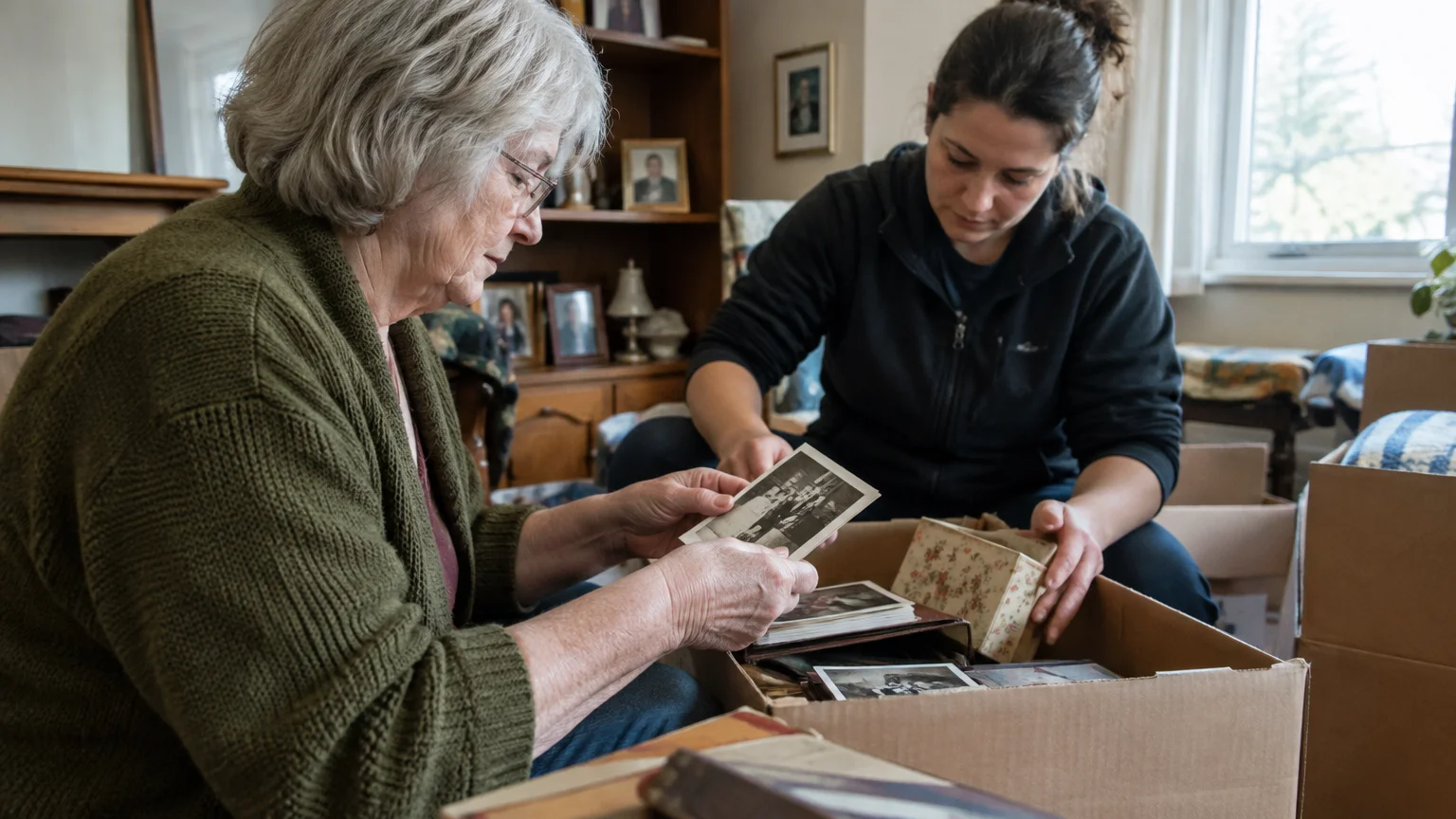
To declutter before moving, keep items that support daily life, fit the new home, or have clear personal value. Let go of duplicates, broken goods, and furniture that cannot fit. A room-by-room plan helps older adults and families make fair choices without rushing or taking control.
Table of Contents
- Why should you declutter before moving?
- How do you decide what to keep when downsizing?
- What should you measure before choosing furniture?
- What household items are easiest to leave behind?
- How can you handle sentimental belongings fairly?
- What should you do with items you are not taking?
- What is the simplest decluttering plan before moving?
- Frequently Asked Questions
Why should you declutter before moving?
Decluttering before a move means choosing what will go to the next home. This reduces the number of items that need sorting, packing, lifting, and placing. It can also help a smaller home feel useful from the first day.
For older adults, a lighter move may mean less work during a major change. It may also leave more open space and fewer trip hazards. The goal is not to erase a lifetime of memories. The goal is to choose what supports the next part of life.
How downsizing changes what is worth taking
Downsizing means moving to a home with less space or fewer rooms. An item that worked well in a large house may not suit an apartment, condo, assisted living home, or smaller rental. Begin with the rooms and routines in the new home.
A dining set may be useful when meals will still happen around a table. It may not be needed if the new home has only a small eating area. A large tool collection may help a homeowner but serve little use for a tenant who will not make repairs.
Abilene Texas Movers can help with the moving part of this change. That may include careful packing, loading, and transport. The family still makes the final choices. Moving help works best after the household knows what will stay.
What space limits can reveal
A move takes time, labor, supplies, and room in a truck or container. More belongings also mean more work after arrival. This does not mean useful things should be discarded just to make the move easier.
Instead, give each item a clear reason to travel. Ask three simple questions: Will it be used? Will it fit? Does it matter enough to keep? If the answer is no each time, the item may be ready for another home.
This method keeps choices practical. It also avoids judging a person’s past choices. In Abilene, families can use the same plan whether they are moving across town or to a smaller home nearby.
How do you decide what to keep when downsizing?
Keep items that support daily needs, fit the new home, or hold strong personal meaning. Review one group at a time instead of judging the whole house at once. Small choices over several days are often easier than one long sorting session.
Which items support your daily life?
Start with items used for sleeping, bathing, dressing, eating, taking medicine, and moving safely. These needs come before decorations or extra supplies. A favorite chair may be more useful than several side tables if it helps someone rest.
Use these questions for each item:
- Has someone used it during the past year?
- Will the new home have space for it?
- Is it safe and in working order?
- Would replacing it be hard or costly?
- Does it support a regular activity or important routine?
The answers should guide the choice, not pressure from relatives. Some items used only rarely may still matter. Emergency supplies, legal papers, mobility aids, and seasonal goods can all have a clear purpose.
How to separate practical value from guilt
Guilt can make decluttering hard. Someone may keep a gift because it came from a loved one. They may keep a dish because it belonged to a parent, or an appliance because it cost a lot. These feelings are real, but every item does not need to move.
Try separating the memory from the object. A family member could take a photo, write down the story, or choose one item from a set. A gift can be valued without being kept forever. The person moving should have a voice when the belongings are theirs.
Pause when a choice becomes tense. Mark the item as undecided and return to it later. This protects family ties and gives the owner time to think. Abilene Texas Movers can help Abilene residents with the physical move, but sorting should remain personal and respectful.
What should you measure before choosing furniture?
Measure the new rooms, doors, halls, elevators, and stair turns before moving large furniture. Then compare those measurements with each item’s full size. A piece may fit the room but fail to fit through the entry path.
How to compare furniture with the new floor plan
Get a floor plan from the new home when possible. Mark doors, windows, heating vents, outlets, closets, and walking paths. A room may look large on paper but feel crowded after adding a bed, sofa, dresser, or table.
Measure the width, depth, and height of each piece. Include removable legs, handles, cushions, and other parts that change how it must be carried. Measure the narrowest points between the moving truck and the final room.
A paper layout can make choices easier. Cut simple shapes for the main furniture and place them on the room plan. Leave open paths to bathrooms, bedrooms, exits, and storage areas. This can also show which items should arrive first.
Which large items may not fit or work well
Large furniture is often the hardest choice. A tall dresser may block a window. A deep sofa may narrow a safe walking path. A heavy bed frame may be hard to use when little space remains around it.
Consider its job, not only its size. If the item has a needed purpose, ask whether a smaller piece can do the same job. A narrow bookcase may hold favorite books without taking up a full wall.
Do not assume every item can be taken apart. Older furniture may have weak joints, glued parts, or special assembly needs. Professional movers can discuss safe handling, but the household should decide if the piece belongs in the new home.
What household items are easiest to leave behind?
The easiest items to leave are often duplicates, broken goods, unused supplies, and things that do not suit the new routine. Sort these groups early. They usually bring less emotion than family keepsakes or daily furniture.
Duplicates, unused appliances, and extra supplies
Kitchens often hold several versions of the same tool. Keep the best working item and question the rest. This may include extra bowls, serving dishes, pans, mugs, small appliances, and containers without matching lids.
When learning how to pack bowls or how to pack dishes for moving, first decide which pieces deserve space. Pack plates upright with padding around them. Wrap bowls separately and fill empty gaps so they cannot shift. Use strong boxes for fragile dishes and mark the contents clearly.
Review cleaning supplies, paper goods, light bulbs, and repair items in the same way. Keep what the new home needs, but avoid moving leaking, damaged, or unsafe products. Follow local rules for chemicals, batteries, and electronic waste.
Clothing, linens, books, and hobby materials
Sort clothing by season, size, condition, and actual use. Keep comfortable clothes that fit the person’s current life. Set aside items that no longer fit, need major repair, or have not been worn for a long time.
Linens can multiply over the years. Choose enough sheets, towels, blankets, and table linens for the new home. Books and hobby items need a personal review. Someone may keep favorite books or tools for one active hobby instead of the full collection.
Avoid rules that remove personal choice. One person may use craft materials every week. Another may have stopped using them. The answer depends on current plans, available space, and comfort.
How can you handle sentimental belongings fairly?
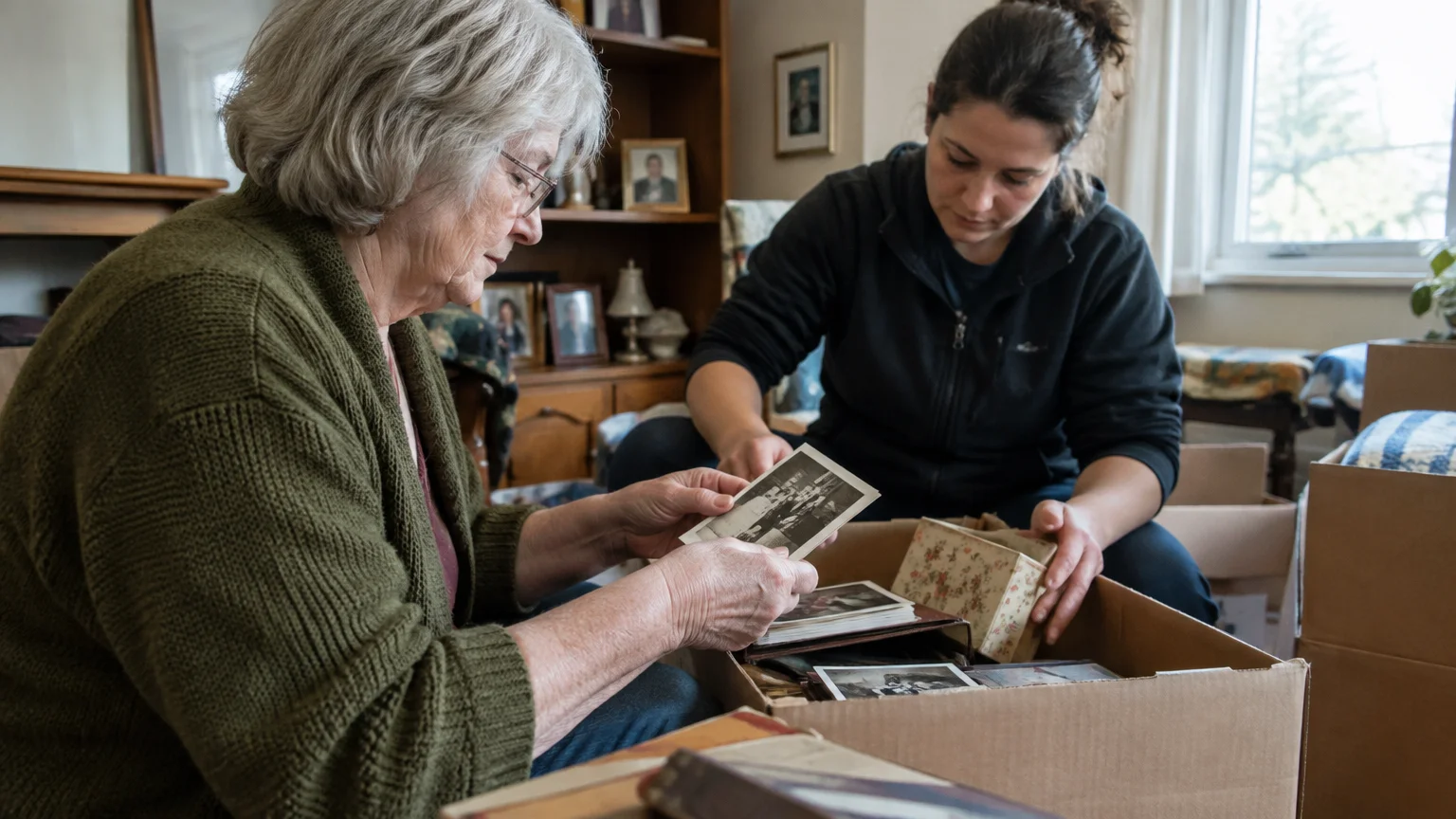
Handle sentimental items slowly and with the owner’s permission. Memories cannot be measured by an object’s size, cost, or age. A fair process gives the person moving time to explain what matters.
Ways to preserve memories without keeping everything
Photos can preserve the look of large collections, quilts, artwork, and furniture. Write a short note about who owned an item, where it came from, or why it mattered. This adds meaning without requiring every object to move.
Family members may choose one item from a set. One serving dish may represent a larger collection. A child may want a favorite chair, while another relative may want a tool or artwork. Clear choices can reduce later arguments.
Important papers need special care. Keep deeds, wills, insurance records, medical documents, identification, and financial records secure. Do not discard papers simply because they look old. A trusted legal or financial professional can explain what should stay.
How to involve a parent without taking over
A parent should lead decisions about personal belongings whenever possible. Family members can carry boxes, read labels, measure rooms, and schedule help. They should not quietly remove items or decide that something has no value.
Use short work sessions with breaks. Ask open questions such as, “Would this help in the new home?” or “Would you like another family member to have this?” Avoid asking why someone kept an item for so long. That can sound like criticism.
If memory loss, unsafe conditions, or serious conflict affects the process, seek suitable support. A doctor, social worker, care manager, or trusted legal adviser may help. Movers can handle physical work, but health and personal choices need the right support.
What should you do with items you are not taking?
Create groups for family, donation, sale, recycling, disposal, and short-term storage. Label each group before packing begins. This keeps unwanted items from being packed by mistake or left until moving day.
How to sort items for family, donation, sale, or disposal
Set up separate areas in a garage, spare room, or cleared corner. Use large labels that everyone can read. Keep important papers and valuables away from general household goods.
A practical sorting order is:
- Set aside items that must move with the household.
- Offer selected belongings to family members with a firm pickup date.
- Prepare clean, usable goods for a suitable donation group.
- List only valuable items worth the time needed to sell.
- Recycle or dispose of damaged, unsafe, or unusable items properly.
- Place approved storage items in labeled containers.
Do not leave every item in the “maybe” group. A deadline helps. If no one claims an item by that date, the family can make the next choice. Donation centers may have rules for furniture, mattresses, electronics, and appliances, so check before loading a vehicle.
When professional removal or storage makes sense
Storage can help when a move is temporary, family members need more time, or a home sale is pending. It should not become a place where every hard choice disappears. Store only items with a clear future use, and label each container.
Professional removal may help with heavy furniture, full cleanouts, or items that cannot be lifted safely. Loading & Unloading Help may suit a household that packs its own belongings but needs help with heavy boxes and furniture. Local Movers may help with a nearby home move, while Long Distance Movers may suit an interstate move.
For a business or office downsizing, Commercial & Office Movers can help reduce downtime while staff sort furniture and equipment. Apartment Movers may help when elevators, stairs, or narrow halls make a smaller-home move harder.
What is the simplest decluttering plan before moving?
The simplest plan is to start early, work room by room, and make one choice at a time. A written moving checklist keeps the work fair and helps avoid last-minute packing. The plan should match the person’s health, energy, and moving date.
A room-by-room timeline for making decisions
Begin with storage areas, spare rooms, and duplicates. These spaces often hold items that are not part of daily routines. Next, sort clothing, books, linens, and kitchen goods. Leave daily medicines, basic clothing, and regular tools until closer to the move.
Use this sequence:
- Walk through the new home and note its rooms and limits.
- Measure large furniture and compare it with the floor plan.
- Sort one small area into keep, family, donate, sell, recycle, dispose, and storage.
- Remove items that are leaving before packing items that are staying.
- Pack daily goods in clearly marked personal boxes.
- Confirm the moving path, access details, and heavy-item needs.
- Review undecided items once more, then set a firm final date.
Keep an open box for documents, keys, chargers, medicines, and basic toiletries. Mark it as a first-night box. This keeps important items from being buried in the moving truck.
Key takeaways for a calmer, smaller move
The best downsizing choices are clear, useful, and respectful. A smaller home does not require anyone to erase their history. It calls for a thoughtful choice about which belongings support life ahead.
- Start with daily needs, safety, and the new home’s available space.
- Measure furniture and the full path before deciding what moves.
- Use photos, notes, and family sharing to preserve memories.
- Give each unwanted item a clear next step and deadline.
- Let the person moving lead personal decisions whenever possible.
Abilene Texas Movers helps households with careful moving work and nearby communities. The team can support local moves, smaller-home moves, and the physical work that follows a clear sorting plan. Contact us today to discuss the moving help that fits your household’s plan.
Frequently Asked Questions
How far in advance should someone declutter before moving?
Starting several weeks before the move gives the household time to make calm choices. More time may be needed for a full home, a parent’s move, or the sale of valuable items. Short sessions work well. Sorting one drawer, shelf, or closet at a time can prevent fatigue.
What should a senior take when moving to a smaller home?
A senior should take items that support daily routines, comfort, safety, and personal meaning. This may include favorite furniture, needed clothing, medicines, important papers, and selected keepsakes. The new floor plan should guide larger choices. Family members should support the process without making personal choices for the owner.
How do families decide what to do with a parent’s belongings?
Families should ask the parent what matters and sort items with permission. Make groups for moving, family, donation, sale, recycling, disposal, and storage. Set deadlines for pickups and sales. If health or memory concerns affect decisions, seek help from an appropriate care or legal professional.
Is it better to sell or donate unwanted items before a move?
Selling makes sense when an item has enough value to justify the time, photos, messages, and pickup planning. Donation may be simpler for clean, usable goods that are not worth listing. Damaged or unsafe items should not be donated. Check local rules before disposing of electronics, chemicals, or batteries.
Can movers help decide what belongings to keep?
Movers can explain packing, lifting, access, and transport needs. They may point out when a large item needs special handling or may be hard to move. The household should decide what has personal or practical value. Professional moving help is most useful after keep and leave decisions are clear.
If you are not sure what you are dealing with, it is worth having someone look at it before it turns into a bigger job. Get in touch with Abilene Texas Movers today and we will tell you where you stand.