The right moving box sizes make packing safer and easier. Small boxes suit heavy items like books, cans, and tools. Medium boxes fit most home goods. Large boxes work best for light items like linens and pillows. Specialty boxes protect dishes, clothes, mirrors, and fragile items during a move in Abilene.
Table of Contents
- What moving box sizes do you need for each room?
- Which boxes are best for kitchen items?
- What box sizes should you use for bedrooms and closets?
- Which moving boxes work best for living rooms?
- What boxes should you use for bathrooms, offices, and garages?
- How do you choose the right box material and strength?
- How should you organize and label boxes before moving day?
- Frequently Asked Questions
What moving box sizes do you need for each room?
Most homes need a mix of small, medium, and large boxes. The right choice depends on each item’s weight, shape, and chance of damage. A box should feel steady when lifted and close without bulging. Matching the box to the contents helps prevent crushed items and sore backs.
A small box often holds books, canned food, small appliances, records, or hand tools. These items become heavy fast, so a smaller box makes them safer to carry. A medium box works well for toys, kitchen tools, folded clothes, shoes, and many household items. It is the best general box for most rooms.
Large boxes suit light, bulky goods. Good examples include pillows, blankets, comforters, lampshades, and stuffed animals. Heavy items should not fill a large box. Too much weight can tear the bottom or make the box unsafe to lift.
Specialty boxes solve packing problems that regular boxes cannot. Wardrobe boxes hold clothes on hangers. Dish packs use thick walls and inserts. Mirror boxes protect flat, fragile items. Mattress and television cartons fit large shapes more closely.
How do room contents affect the number of boxes?
Box needs depend on the room size and how full it is. A crowded kitchen may need more small and medium boxes than a simple guest room. A home office with many books needs strong small boxes, while an office with mostly folders may use medium boxes.
A useful plan is to sort each room before buying supplies. Group similar items, remove things that will not move, and estimate box needs by weight. Abilene Texas Movers can help Abilene homeowners and business owners choose a packing plan, especially when stairs, narrow halls, or large furniture add work.
Which boxes are best for kitchen items?
Small and medium boxes are usually best for kitchen items. Small boxes hold dishes, cans, bottles, and small appliances without becoming too heavy. Medium boxes work for pots, pans, plastic containers, and dry goods. Large boxes should hold only light kitchen items, such as towels or empty plastic bowls.
How should you pack dishes for moving?
Dishes should be wrapped one at a time and packed on their edges, not stacked flat. Place a soft layer at the bottom of the box. Wrap each plate, bowl, or serving dish with paper or another clean packing material. Add padding between items, along the sides, and across the top.
A dish pack or divided insert gives fragile kitchen items more support. A dish pack is a sturdy box made for plates, bowls, and glassware. Divided inserts create separate spaces, which helps stop pieces from hitting each other during loading and travel.
Bowls need special care because their curved shape leaves empty space. Wrap each bowl, then place smaller bowls inside larger ones when safe. Fill the open space with paper. Do not force pieces together or leave loose room around them.
Glassware needs a divided box when possible. Wrap each glass, place it in its own section, and add padding above the top row. Mark the box as fragile, but do not rely on the label alone. A well-packed box still needs careful stacking.
Cookware can go in medium boxes with padding between pieces. Heavy pots should sit near the bottom. Turn handles different ways so they do not create one pressure point. Seal pantry goods first, and place open food in separate bags.
When you are unsure how much padding to use, try a simple test. Gently shake the closed box. Nothing inside should move. If an item shifts, add more packing paper before sealing it.
What box sizes should you use for bedrooms and closets?
Medium boxes work well for folded clothing, shoes, handbags, and personal items. Large boxes are better for pillows, blankets, comforters, and soft toys. Small boxes protect jewelry, books, keepsakes, and other dense items that could make a large carton too heavy.
When should you use wardrobe boxes?
Wardrobe boxes help with clothing that stays on hangers. They include a bar that lets shirts, jackets, dresses, and suits hang during the move. This saves folding time and can reduce deep wrinkles. Clothing should not be packed so tightly that it cannot slide along the bar.
A wardrobe box also helps with tall coats and formal wear. Shoes can go in a separate small or medium box. Keeping shoes apart from clean clothing helps prevent marks and odors. Label the box with the room and clothing type inside.
Linens belong in medium or large boxes, based on their weight. A large box can hold comforters and pillows, but it should not be packed so tightly that it becomes hard to close. Sheets and towels can also provide soft padding around items that need extra care.
Books should go in small boxes. Place them flat or with the spines facing a sturdy side. Do not mix a full load of books with fragile items. A small box filled with books may still be heavy, so seal it well and lift it with care.
Personal items need more than the right box size. Important papers, medicine, keys, and daily-use items should stay together in a clearly marked essentials box. Keep that box where you can reach it quickly, rather than burying it under other cartons.
Which moving boxes work best for living rooms?
Living rooms need several box types because they contain light decorations, fragile electronics, books, and bulky items. Medium boxes work for games, small decorations, and media collections. Large boxes can hold pillows and throws. Specialty cartons may be better for televisions, mirrors, artwork, and lamps.
How should decorations and electronics be packed?
Wrap decorations separately and use a medium box with firm padding. Group items by size when possible. Place heavier pieces below lighter pieces. Fill small gaps so objects cannot slide into each other.
Electronics should go in their original cartons when those cartons are still strong. If the original box is gone, use a sturdy carton with padding on every side. Remove batteries from remotes and small devices. Keep cords with the matching item, and label each bundle.
A television needs protection on the screen and corners. A television carton or strong custom-sized box is safer than a loose oversized carton. Keep the screen upright during transport when the maker’s instructions call for that position.
Lamps should be taken apart when possible. Remove the shade, bulb, and harp, then wrap each part separately. Large lamp bases may need a medium box with padding. Lamp shades often need a large box because crushing them can cause lasting bends.
How can bulky or fragile items stay safe?
Furniture should not be forced into moving boxes. Wrap tables, chairs, and cabinets with moving blankets or furniture pads. Protect corners, glass panels, and finished surfaces. Furniture Movers can help with heavy pieces when lifting, stairs, or tight turns create a safety concern.
Mirrors and artwork need flat protection on both faces. Use corner guards when available, then place the item in a fitted carton. Do not stack heavy boxes on top. Marking the carton helps the crew see that it needs special handling, but careful packing remains the main protection.
What boxes should you use for bathrooms, offices, and garages?
Small and medium boxes handle most bathroom, office, and garage items. Small cartons suit bottles, tools, hardware, and books. Medium cartons fit towels, folders, desk supplies, and lighter equipment. Large cartons should be limited to soft or very light items.
Bathrooms contain many small objects, so sorting comes first. Seal liquids in bags before placing them in boxes. Keep cleaners apart from towels, clothing, food, and paper. Items that can leak should stand upright with padding around them.
Offices often contain heavy paper, files, and electronics. Small boxes are best for dense paper and books. Medium boxes can hold empty folders, desk items, and light equipment. Sensitive papers should stay dry and organized by project or household need.
Garages need extra care because tools and hardware are dense. Small boxes help control the weight. Wrap sharp edges and keep loose nails, screws, and parts in sealed containers. Long tools may travel outside a box when secured and protected from damage.
What should happen to chemicals and unwanted items?
Household chemicals, fuel, paint, and some batteries may not be safe in a moving truck. Check the product label and the mover’s rules before packing them. Items that cannot travel should go through the proper local disposal option.
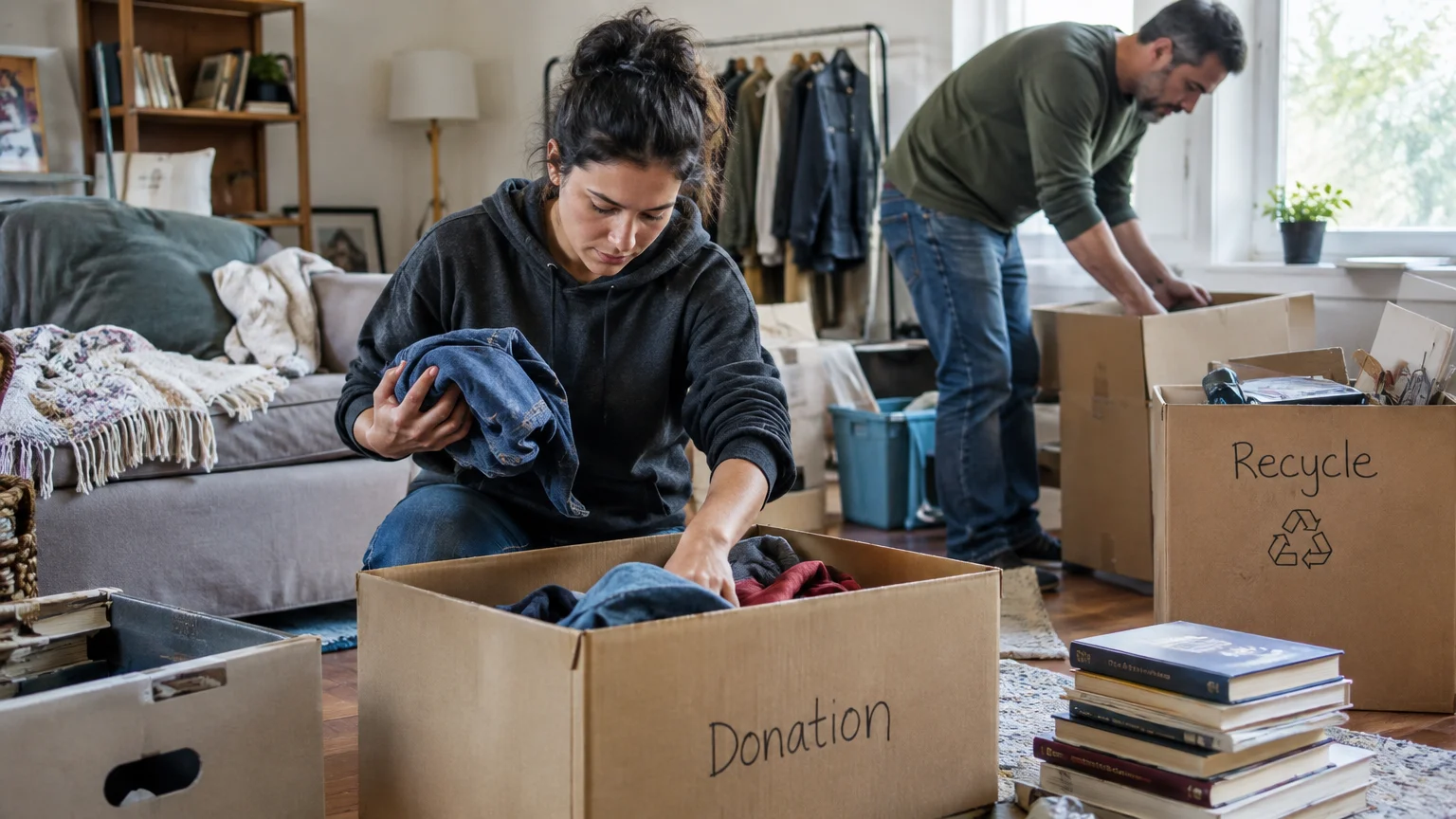
A move is also a good time to sort donations, recycling, and broken items. Do not pack items simply because they are already in a closet. Fewer boxes make loading and unpacking easier. Better sorting also reduces clutter in the new space.
How do you choose the right box material and strength?
Standard corrugated cardboard works for most clean, dry household goods. Corrugated cardboard has layers that create a strong, light wall. Double-wall boxes have extra layers and suit heavy, fragile, or valuable items. Plastic bins can work well for items that need moisture protection or repeated use.
When do stronger boxes or plastic bins make sense?
Use double-wall cartons for books, dishes, small appliances, tools, and other dense goods. They also help with items that may face extra handling. A standard carton is often enough for towels, clothing, and soft decorations.
Plastic bins can protect seasonal clothing, office records, and household items from damp conditions. They help when a family plans to store items after the move. Bins still need correct weight limits, secure lids, and careful stacking.
Renting moving boxes or reusable containers may suit a move with many similar items or little storage space. Buying cardboard may fit a smaller move or a household that wants to recycle cartons after unpacking. The better choice depends on storage plans, handling needs, and the items being packed.
How can you check a box before using it?
A box should be clean, dry, firm, and free from deep creases. Check the bottom, corners, and flap folds. Avoid cartons with soft spots, water marks, strong odors, or torn hand holes. Reused boxes should be checked even more closely.
Seal the bottom with strong packing tape in a full strip across the seam. Add another strip when the contents are heavy. Do not depend on old tape or a folded flap alone. Once packed, lift the box slightly to check whether the bottom stays firm.
Boxes should stack with heavier cartons below lighter ones. Keep fragile cartons away from shifting loads. A safe stack is stable, easy to see over, and not so tall that someone must reach above shoulder height.
How should you organize and label boxes before moving day?
The best packing order starts with items used least often. Seasonal goods, decorations, spare linens, and storage items can go first. Daily clothes, basic dishes, medicine, documents, and cleaning supplies should stay until later. This order keeps the home usable during the move.
- Sort each room and remove items that will not move.
- Gather boxes, tape, labels, padding, bags, and markers.
- Pack low-use items first, then work toward daily essentials.
- Fill boxes enough to prevent movement without forcing the flaps.
- Seal each box and label it before starting the next one.
- Keep an essentials box separate for the first night.
Each label should show the room, a short contents list, and a handling note when needed. Labels such as “Kitchen: plates and glasses” are more useful than “Kitchen: stuff.” A simple color system can help, but words should still appear because colors may be hard to see in dim areas.
An inventory list helps track valuable or important items. It can be written on paper or stored digitally. Photos of packed boxes may also help with later questions. Keep private records secure.
What should be ready for moving day?
Walkways should be clear before movers arrive. Boxes should be closed, labeled, and placed where they will not block doors. Items that are not moving should be marked clearly and kept apart. Local Movers can assist with household moves, while Apartment Movers may help when stairs, elevators, or tight halls affect the plan.
Key takeaways
- Small boxes are best for books, canned goods, tools, and other heavy items.
- Medium boxes handle most kitchen, bedroom, office, and living room goods.
- Large boxes should hold light items such as bedding, pillows, and lampshades.
- Specialty cartons help protect dishes, hanging clothes, mirrors, artwork, and televisions.
- Strong, dry, well-labeled boxes make loading, transport, and unpacking safer.
Conclusion
The right moving box sizes depend on the weight, shape, and fragility of each item. Small boxes control heavy loads, medium boxes handle everyday goods, and large boxes protect light items. Specialty cartons add support where regular boxes may fail.
Careful sorting and clear labels make the move easier for everyone. Abilene Texas Movers serves homeowners, tenants, and business owners. Contact us to discuss your move and request a quote.
Frequently Asked Questions
What is the best box size for books?
Small boxes are usually best for books because books become heavy quickly. Pack them flat or with the spines facing a strong side. Keep the box small enough to lift safely. Do not mix a full load of books with fragile items or light decorations.
How should someone pack bowls for moving?
Wrap bowls one at a time and place them inside each other only when they fit safely. Add paper between nested bowls and around the outside. Pack bowls on their edges inside a sturdy box. Fill open spaces so the bowls cannot move during handling.
Are wardrobe boxes worth using?
Wardrobe boxes are helpful for clothing that stays on hangers. They reduce folding and make it easier to move dresses, coats, suits, and shirts. Folded clothing can go into medium boxes instead. Shoes and accessories should usually travel in separate cartons.
Can moving boxes be reused?
Moving boxes can be reused when they are clean, dry, firm, and free from damage. Check the bottom seams and corners before packing. Do not reuse boxes with water marks, crushed sides, weak flaps, or strong odors. Replace old tape with fresh packing tape.
Should heavy items go in large boxes?
Heavy items should usually go in small boxes. Books, tools, canned goods, and dense office files can make large cartons unsafe to lift. Large boxes are better for light items such as pillows, blankets, and stuffed toys. A steady box is safer than a full box.
If you are unsure how to plan your move, Abilene Texas Movers can help you review the work ahead. Contact us to discuss your moving needs and request a quote.